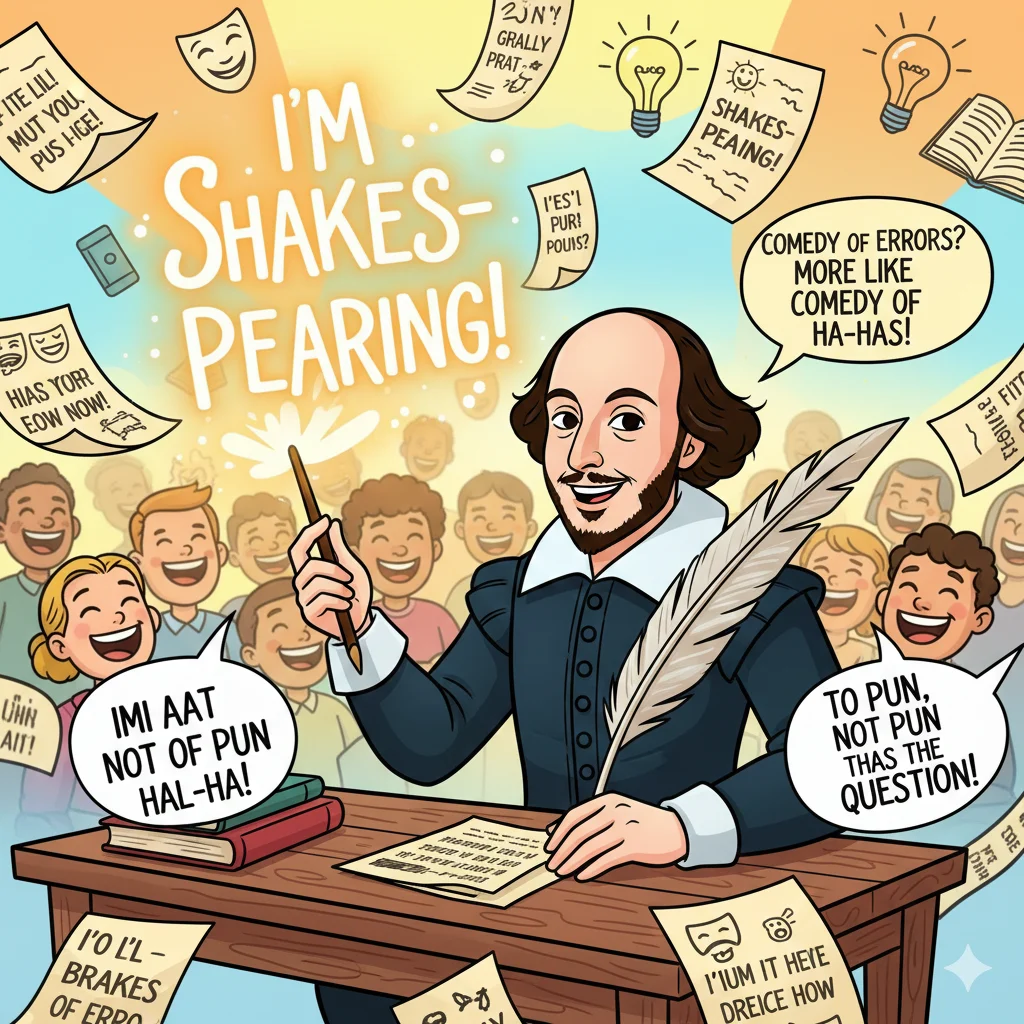
Did you know that the Bard of Avon wasn’t just a playwright—he was basically the original dad-joke master? Yes, puns were used by Shakespeare in almost every play, often sneaking in clever jokes right under the noses of unsuspecting audiences. Imagine sitting in an Elizabethan theater, laughing at wordplay while your neighbors are confused—classic Shakespeare!
In this article, you’ll explore the funniest Shakespearean puns, learn why he loved wordplay, discover trivia about his humor, and even get a list of puns that will make you feel like a Renaissance pun-master yourself. Get ready for a witty ride—Elizabethan style.
Shakespeare’s Secret Love for Wordplay
Shakespeare didn’t just write stories; he played with words like a kid in a candy store. Wordplay was everywhere—his characters often used double meanings, clever homonyms, and puns that still make readers laugh today.
- Why puns? They add humor, tension, and even subtle criticism of society.
- Example: In Romeo and Juliet, Mercutio says, “Ask for me tomorrow, and you shall find me a grave man.” It’s funny and morbid at the same time.
Humor studies show that puns engage our brains by forcing us to reconcile multiple meanings, which is why they’re so satisfying to understand.
Fun fact: Shakespeare often used puns to bypass censorship. Clever wordplay allowed him to joke about politics, love, and even bodily functions without getting in trouble!
Top 10 Shakespearean Puns That’ll Make You LOL
Here’s a list of 10 classic puns from the Bard, with witty explanations:
- “Ask for me tomorrow, and you shall find me a grave man.” – Romeo and Juliet
Why it’s funny: The pun on “grave” (serious vs. dead) is darkly hilarious. - “I’ll put a girdle round about the Earth in forty minutes.” – A Midsummer Night’s Dream
Why it’s funny: “Girdle” plays on both clothing and encircling the globe. - “Thou art as fat as butter.” – Henry IV
Why it’s funny: Insult disguised as culinary humor. - “It is not madness that I have uttered: bring me to the king.” – King Lear
Why it’s funny: The double meaning of sanity vs. absurdity tickles the brain. - “Better a witty fool than a foolish wit.” – Twelfth Night
Why it’s funny: The flip of words creates instant irony. - “I do desire we may be better strangers.” – As You Like It
Why it’s funny: Polite insult, Renaissance-style. - “For you, in my respect, are all the world.” – Troilus and Cressida
Why it’s funny: Hyperbolic love pun that’s a bit over-the-top, in a cute way. - “No legacy is so rich as honesty.” – All’s Well That Ends Well
Why it’s funny: The pun lies in contrasting worldly wealth vs. moral wealth. - “I’ll teach you differences.” – Much Ado About Nothing
Why it’s funny: Can refer to literal teaching or exposing personal quirks. - “He is drowned in a most humorous sadness.” – Hamlet
Why it’s funny: Oxymoronic pun mixing emotions—laughing while sad.
How Shakespeare’s Puns Influence Modern Humor
Shakespeare’s wordplay didn’t just stay in the 1600s—it shaped modern comedy. Think of dad jokes, memes, and witty tweets: all owe a nod to his clever puns.
- Pop culture connection: Many TV sitcoms and films borrow the pun style he mastered.
- Meme translation: “I came, I saw, I punned” could be a modern Shakespeare tweet.
- Language evolution: His wordplay enriched English vocabulary—he invented over 1,700 words!
Trivia: “Eyeball,” “bedroom,” and “lonely” were all Shakespeare inventions—pun-ready vocabulary included.
Why Puns Make Us Laugh
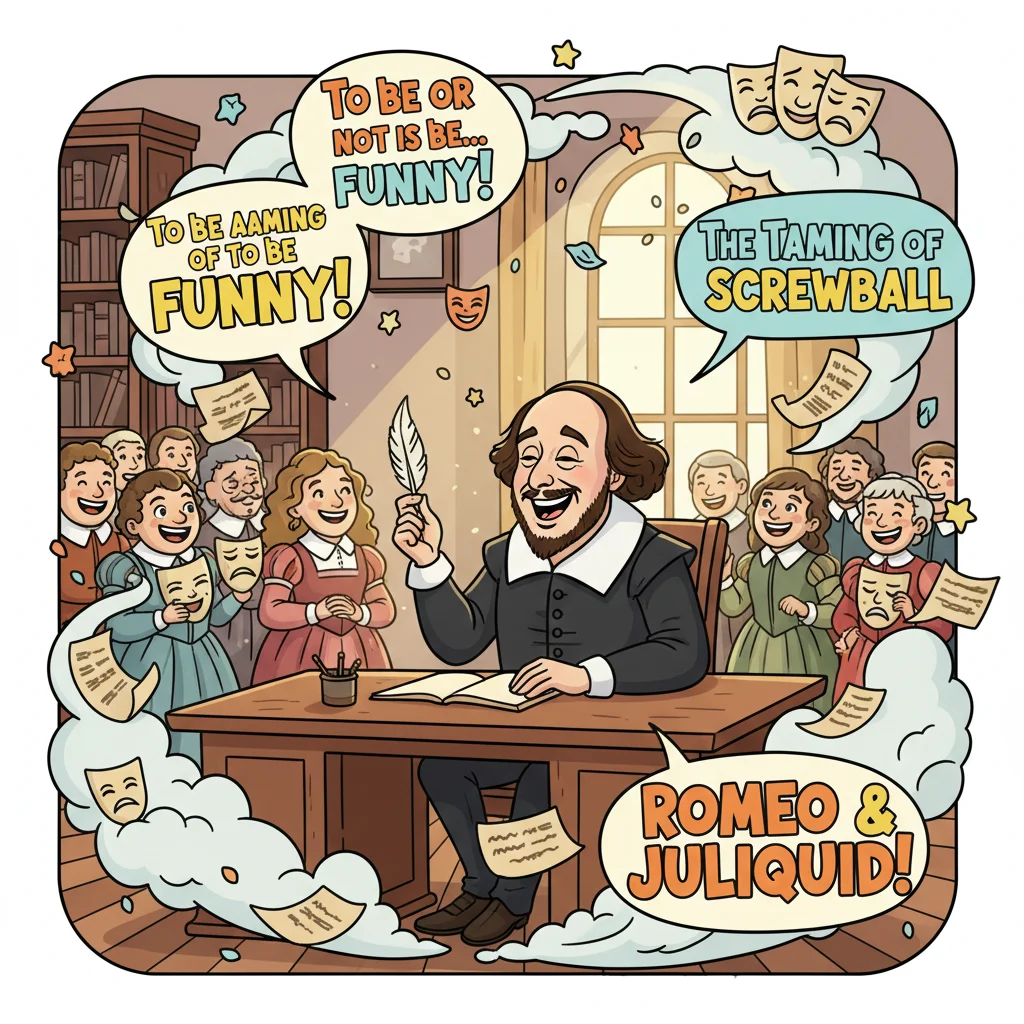
Humor isn’t just fun—it’s a brain workout. Puns trigger the frontal lobe by forcing our brains to process two meanings at once. That moment of recognition is called “semantic incongruity resolution”—basically, your brain goes, Ah! I get it!
- Fact: Studies show puns improve creativity and mental flexibility.
- Real-world proof: Shakespeare used puns not just for laughs, but to engage audiences intellectually.
“A pun is the lowest form of wit, but the highest form of intelligence.” – Anonymous
FAQs About Shakespeare and His Puns
Q1: Did Shakespeare really invent all his puns?
A: Mostly, yes! While wordplay existed before him, he elevated puns to an art form.
Q2: Which play has the most puns?
A: Love’s Labour’s Lost is notorious for dense wordplay and clever jokes.
Q3: Are Shakespeare’s puns still funny today?
A: Absolutely! Some require explanation, but many are timeless classics.
Q4: Can puns teach language effectively?
A: Yes! Puns help learners understand multiple meanings and idioms in context.
Q5: Why are puns often considered “bad jokes”?
A: Because they’re groan-worthy! The humor comes from surprise and clever word tricks, which can be silly but satisfying.
How to Make Your Own Shakespearean Puns
Want to pun like the Bard? Here’s your mini-guide:
- Choose a double meaning word.
- Think of a context where it could twist.
- Use irony or exaggeration.
- Mix in a cultural or topical reference.
- Test it on friends—groans count as success.
Example: “I’m reading a book on anti-gravity. It’s impossible to put down!” – classic pun formula, Shakespeare-style wit included.
Fun Facts About Shakespeare’s Wordplay
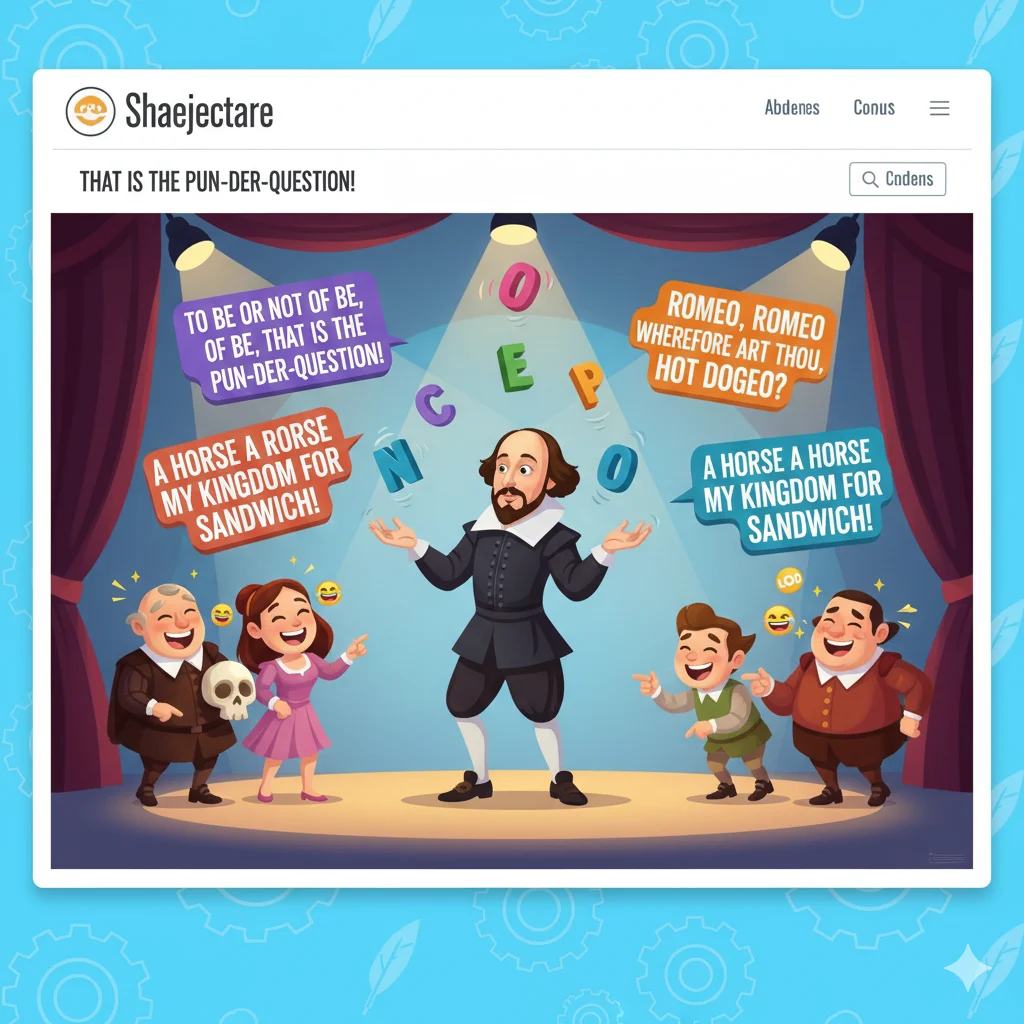
- He often played with innuendos—sometimes naughty, sometimes clever.
- His puns weren’t limited to English; he sometimes used Latin and French for extra flavor.
- Comic relief characters, like the Fool in King Lear, were pun specialists.
- Elizabethan audiences loved layered humor—they laughed at multiple meanings simultaneously.
- Wordplay helped him sneak political commentary past strict censors.
Conclusion:
From clever jabs to witty observations, puns were used by Shakespeare to entertain, teach, and provoke thought. His humor transcends time, inspiring dad jokes, memes, and modern comedy.
So next time you make a pun, remember: you’re part of a 400-year-old tradition! Which pun made you laugh hardest? Share it with friends—just like Shakespeare would.
“Mary Webb, English novelist and poet known for mystical rural settings, emotional depth, and lyrical tales rooted in nature and the spirit of the English countryside.”